
4 Tips To Ease Tension Headache

Tension headaches are the most common types of headache experienced by adults. Those who have experienced tension-type headaches in the past are left wondering why they occur and what they can do to prevent the next one from occurring. It may come as a surprise that there are distinct causes and certain habits that may trigger the onset of a tension headache. This is good news, however, because it means that headache sufferers can take control over their own symptoms and establish good habits that lead to wellness and pain-free days.
Tension headaches occur when neck, shoulder, jaw, and scalp muscles become tense. Many people are surprised when they learn that many of the muscles in the neck, jaw, and shoulder have direct or indirect attachments onto the skull. When these muscles become tense and tight, they pull onto their attachment on the skull resulting in a dull tightness either directly over the muscle or along the length of the muscle resulting in a band of pain and discomfort. Some people experience tension headaches time to time; others experience them more frequently.
There are many activities or habits that can bring on a tension headache. For example, staring at a computer or cell phone screen for extended periods of time or driving long distances without taking breaks can trigger tension headaches. Those individuals who were involved in a motor vehicle accident can develop a whiplash injury which would increase the tension in their muscles at the base of their skull and neck. Other triggers that I have heard from people who experience tension headaches include cold weather, alcohol consumption, dry eyes, fatigue, certain foods, smoking, poor posture, and even emotional stress! Being able to identify the specific things in your life that trigger tension headaches is key to a successful treatment plan to get you on track to a life free from tension headaches.
As a Physical Therapist, I have treated many people just like yourselves in my clinic who have experienced the physical and emotionally draining side effects of frequent tension headaches. For those of you who are experiencing a flare up, I have put together four simple tips to naturally help ease the pain and discomfort associated with a tension headache without having to reach for those pills!
1. Try Heat or Cold Therapy
Heat and cold has been shown to release pain and muscle tension in the short term associated with headache flare ups. If moving your head and neck is very painful and increases your headache symptoms, you may want to try applying heat or cold to your neck first to make performing the exercises or neck movements more tolerable. Is there a benefit of using heat vs. cold? My answer would is it depends on your own personal preference. My recommendation would be which ever you prefer that does not provoke your symptoms and provides you with more comfort. You can ease symptoms of occasional headaches if you take a hot shower or put moist heat on the back of your neck. Try a hot water bottle, a warm towel, or a warm compress. If you prefer cold, wrap an ice pack in a towel around your neck. Always follow heat and ice with exercises that facilitate active neck and head movements in order to improve your range of motion and flexibility.
2. Try Stretching Your Neck
As we discussed earlier, there are specific muscles that have direct and indirect attachments onto the skull. When these muscles become tight and stiff, one way to correct this imbalance is to gently stretch them out. I typically recommend people to perform these types of stretches frequently through out the day and hold them each for 30 to 60 seconds. It is normal to feel some degree of discomfort when stretching these muscles out. You should never aggressively stretch into severe pain as this will further result in increased spasm and guarding of the muscle. I have provided two of the most common stretches I give to people who experience frequent tension headaches. It is important to note here that every individual experiences tightness along different muscles in their neck, jaw, shoulder, and scalp that can contribute to tension headaches. I highly recommend getting an evaluation by a licensed Doctor of Physical Therapy (DPT) to determine exactly which muscles you should be stretching to give you the best form of long term relief and management.
Example: UPPER TRAPEZIUS STRETCH

Begin by retracting your head back into a chin tuck position. Next, place one hand behind your back and gently pull your head towards the opposite side with the help of your other arm.
Example: LEVATOR SCAPULAE STRETCH

Place your arm on the affected side behind your back and use your other hand to pull your head downward and towards the opposite side. You should be looking towards your opposite pocket of the target side.
3. Try Self Trigger Point Release
Trigger points, (also known as “muscle knots”) are often described as sensitive spots in the soft tissues of the body (including muscles, joints, ligaments, and fascia) that are physically palpable (or able to be physically felt by touch). The pain associated with a trigger point frequently radiates from these points of local tenderness to broader areas, sometimes distant from the trigger point itself. For example, stimulating a trigger point in the upper trapezius muscle on the top of the shoulder can refer pain up the side of the neck and into the head region. Any muscle in the body has the potential of forming a sensitive trigger point.
One of the most common areas I see as a Physical Therapist with people who have tension headaches is in the suboccipital region. This is the region that is located on the back of the head at the base of the skull. I often perform manual massage and release techniques to these muscles to help ease the pain associated with trigger points developing in the suboccipital muscles. I will often teach my patients how to replicate this activity at home so if they experience a flare up, they will have an effective way of quickly reducing their pain and improving their function.
Start by putting two tennis balls side by side into a clean sock and tie off the end.
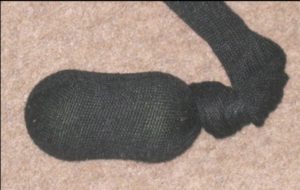
Lay down on a flat surface (such as the floor) and place the two tennis balls in the sock directly under your skull so they are applying direct pressure to the sensitive area. Hold this position on the tender spots until you feel the pain start to slowly resolve. Be aware that initially this will be very uncomfortable and that is a normal response.
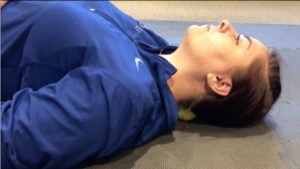
Muscles respond really well to deep pressure. When deep pressure is applied to a muscle for a prolonged period of time, it stimulates very small receptors within that muscle that help to reduce tension and cause the muscle to “release”. As a result, the person feels significantly less pain and stiffness resulting in almost immediate improvement in mobility.
4. Try Meditation and Relaxation Exercise
Ever notice that your headaches come on during stressful events and emotional times? This is a common complaint I hear from many people who come into my clinic. Daily stress, such as from a high-pressure job or a toxic domestic relationship, can lead to frequent tension headaches. A very effective treatment is stress management through personal guided meditation and relaxation training. There are many free resources out there on the internet including phone apps and YouTube videos that offer guided meditations using various audio and video clips to help promote total body relaxation. This helps to reduce the stress response from your brain which helps to reduce over stimulation of your nerves and promotes relaxation of your muscles thus decreasing the output of pain felt by your body. Give it a shot and see how you feel after.
ABOUT THE AUTHOR:

Dr. Garrett Desrosiers PT, DPT
Garrett is the CEO and Co-Owner of ProResults Physical Therapy Inc. in San Marcos, CA (North San Diego County). Garrett has been helping on-the-go active adults and athletes across the south western United States return to a pain-free active lifestyle without medications, injections, surgery or making unnecessary trips to the physician’s office since 2015. He graduated in 2013 with his Bachelors of Science in Kinesiology then went on to receive his Doctorate of Physical Therapy from Husson University in 2015. After working for three years in multiple fast paced outpatient orthopedic physical therapy clinics, Garrett quickly realized he was not able to provide the elite quality care he knew his clients deserved. Garrett felt clients were more than just a number or diagnosis and that in order to provide the time, empathy, passion, and high quality treatment they deserved, starting his own private practice was the only option. Garrett is committed to helping every client make the best decision in regards to their health. His unique, personalized, eclectic, multifaceted approach takes those individuals who have decreased their activities or stopped being active all together to a real solution.