
5 Simple Ways To Relieve Heel Pain

You wake up and take those first initial steps after getting out of bed in the morning. Instantly, you feel the burning, stinging pain on your heel that literally stops you in your tracks. The pain started a couple months ago, and you expected that by this point it would have gone away. You don’t understand why you’re still feeling like this. All you want is to do is be able to live your life the way you used to again- to walk and run free of annoying heel pain. If this scenario sounds familiar, there is a good chance you could be experiencing a condition called plantar fasciitis.
Plantar fasciitis is the most common form of pain that occurs on the bottom of the heel affecting about 2 million people per year. Plantar fasciitis occurs when the strong band of tissue (called the plantar fascia) that supports the arch of your foot becomes irritated and inflamed. In most cases, plantar fasciitis develops without any specific identifiable reason. This condition equally affects athletes and non-athletes.
There are certain risk factors that increase an individual’s risk of developing this painful, debilitating condition. These risk factors include age (most commonly between the ages of 40-60 years old), poor foot mechanics (having a high arch or having flat feet), obesity (more weight equals more stress on the plantar fascia), and occupation (for example factory workers, teachers and others who spend most of their work hours walking or standing on hard surfaces). Wearing high heels has also be known to increase the risk of developing plantar fasciitis. If you’re a runner you should understand that errors in your training can also increase your risk of developing plantar fasciitis. Some of these training errors include sudden increase in your mileage, running up steep hills, and running in worn out shoes. About 20-30% of people who have plantar fasciitis end up experiencing symptoms in both feet.
Many people with plantar fasciitis also have heel spurs. Heel spurs are not the cause of plantar fasciitis pain. One out of ten people have heel spurs, but only one out of twenty people (about five percent) with heel spurs have foot pain. Because the spur is not the cause of plantar fasciitis, the pain can be treated without surgery to remove the heel spur.
So, what can you do today to start finding some relief for your annoying, daily heel pain? As a Physical Therapist, I have treated countless people with heel pain just like you. I have put together five simple ways you can start relieving your heel pain today without medications, injections, or even having to take a trip to the doctor’s office so you can start making some progress today.
1. Stretch Your Plantar Fascia
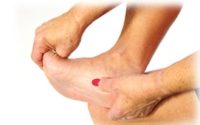
Before taking those first steps in the morning or after you’ve been sitting for a while, I always highly recommend to my patients to stretch out their plantar fascia. Stretching the plantar fascia is simple and easy to do and will help to reduce the amount of pain felt when taking those initial steps. Start by grasping your foot and pulling your big toe towards you as far as you can while also pulling your heel with your opposite hand and pulling up simultaneously. Perform this stretch 3 times and holding it for 30-60 seconds.
2. Stretch Your Achille’s Tendon
The Achille’s tendon has a direct attachment onto the heel. When the Achille’s tendon becomes tight, it pulls on the heel and tightens the plantar fascia below it resulting in localized pain and discomfort. By stretching the Achille’s, you are taking some stress off the plantar fascia.
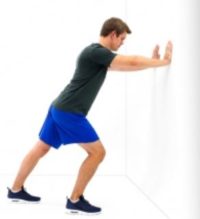
To stretch your Achille’s, start by standing in front of a wall or other sturdy object. Step forward with one foot and maintain your toes on both feet to be pointed straight forward. Keep the leg behind you with a straight knee during the stretch. Lean forward towards the wall and support yourself with your arms as you allow your front knee to bend until a gentle stretch is felt along the back of your leg that is most behind you. Move closer or further away from the wall to control the stretch of the back leg. Also, you can adjust the bend of the front knee to control the stretch as well. Perform this stretch 3 times holding it for 30-60 seconds.
3. Try Over-the-Counter Shoe Inserts
Over-the-counter shoes inserts can help put your arch in a better position to take stress off your plantar fascia. There is also some research out there that shows that pre-made over-the-counter shoe inserts produce better results than custom-made orthotics, which can cost you quite a bit of money. Over-the-counter shoe inserts can be found in your local drug store, retail stores, and even Amazon for a very reasonable price.
4. Try Self Ice Massage
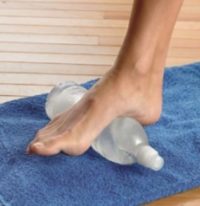
Try freezing a plastic water bottle to perform self-ice massage to the plantar fascia. In sitting or standing roll the bottom of your foot over the frozen water bottle with moderate pressure. Be prepared to feel some discomfort with this one. Use as much pressure as you can tolerate without going into severe discomfort. Try rolling over the frozen water bottle for about 5-10 minutes. This should significantly help to reduce the pain on the bottom of your foot.
5. Temporarily Eliminate Triggers
Understanding the specific activities that trigger your symptoms is key to long term relief from plantar fasciitis. It’s important to temporarily eliminate the triggers that are flaring up your plantar fasciitis to allow it to heal properly and effectively. For example, if wearing high heels seems to flare up your heel pain, temporarily avoid wearing them for a couple weeks. If you’re a runner, consider taking some time off. Modify your training regimen by reducing your miles, slow down, or stop running completely for a couple weeks. A lot of runners try to run through the pain, which only serves to make symptoms worse. Allow the tissues to heal. In the meantime, you can still train with exercise equipment that has the same health benefits of running but does not flare up your symptoms. I always suggest to my runners to continue training using the stationary bike and elliptical while the plantar fascia is healing. Once your feet are feeling better, slowly get back to the activities that were triggering your pain and see how your body reacts. Slow re-introduction of activity is key to preventing acute flare ups of this condition.
ABOUT THE AUTHOR:

Dr. Garrett Desrosiers PT, DPT
Garrett is the CEO and Co-Owner of ProResults Physical Therapy Inc. in San Marcos, CA (North San Diego County). Garrett has been helping on-the-go active adults and athletes across the south western United States return to a pain-free active lifestyle without medications, injections, surgery or making unnecessary trips to the physician’s office since 2015. He graduated in 2013 with his Bachelors of Science in Kinesiology then went on to receive his Doctorate of Physical Therapy from Husson University in 2015. After working for three years in multiple fast paced outpatient orthopedic physical therapy clinics, Garrett quickly realized he was not able to provide the elite quality care he knew his clients deserved. Garrett felt clients were more than just a number or diagnosis and that in order to provide the time, empathy, passion, and high-quality treatment they deserved, starting his own private practice was the only option. Garrett is committed to helping every client make the best decision in regard to their health. His unique, personalized, eclectic, multifaceted approach takes those individuals who have decreased their activities or stopped being active all together to a real solution.